
What is Link Building? The Business Owner’s Guide to Digital PR and Authority
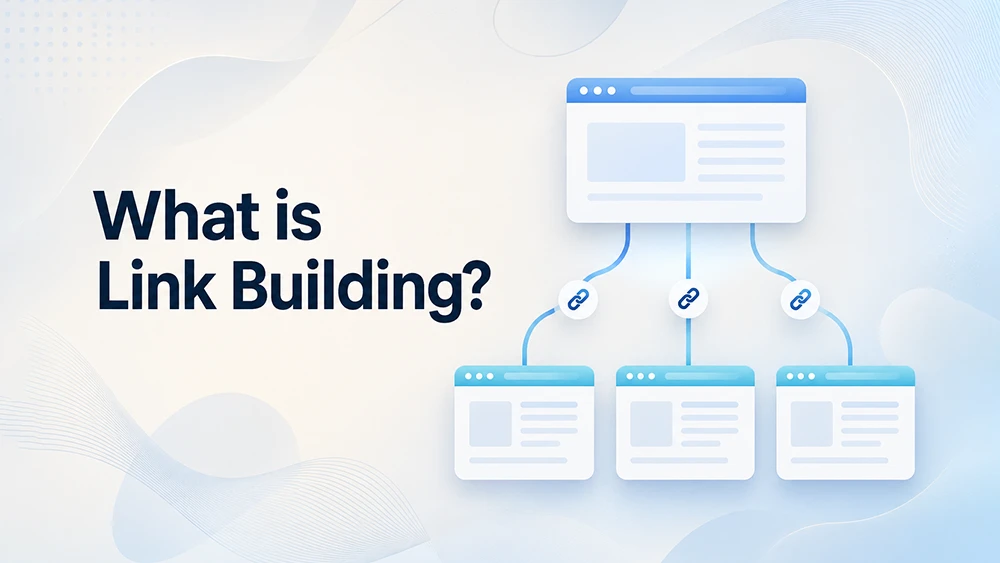
Understanding what is link building is the foundational step for any business owner aiming to transition from a hidden entity to a recognized authority within search results. In a hyper-competitive market like Delhi, where digital landscapes are increasingly crowded, simply having a website is no longer sufficient to secure top rankings.
Link building functions as a network of digital endorsements, signaling to search engines that your content is trustworthy and relevant. By moving beyond generic SEO advice and prioritizing high-quality, editorial-driven digital PR, you can effectively secure your brand’s visibility and outpace competitors who rely on outdated or spammy practices.
- Demystifying Backlinks: How Search Engines Measure Digital Trust
- White-Hat vs. Black-Hat: Protecting Your Domain from Algorithmic Penalties
- Why Link Building is Non-Negotiable for Business Authority
- Core Off-Page Strategies That Deliver Results
- Advanced Link Building Tactics for Scaling Authority
- The Power of Internal Linking Loops
- Measuring Your Link Building ROI and Impact
- Understanding Referral Traffic and Lead Generation
- Final Thoughts: Mastering Link Building
- Frequently Asked Questions About Link Building
Demystifying Backlinks: How Search Engines Measure Digital Trust
At its core, a backlink is a hyperlink from one website to another. However, to a search engine like Google, it is much more than a simple navigation tool; it is a profound conduit of authority. When a high-authority publication references your website, it effectively passes a portion of its own “link equity” or “authority” to your domain. In 2026, Google’s algorithms have moved significantly beyond simply counting the volume of links.
They now utilize complex, machine-learning-based models to analyze the semantic relationship between domains, the context of the surrounding content, and the actual intent behind the connection. The goal for any modern brand is not merely to acquire a large number of links, but to cultivate an intricate network of trust that proves to search engines that your business is a legitimate industry leader.
The Evolution of PageRank: From Volume to Veracity
The landscape of search optimization has shifted from a quantitative numbers game to a qualitative strategy built on veracity and authenticity. Search engines now evaluate every single potential link against several rigorous benchmarks to ensure they are not being manipulated:
- Topical Relevance: This is arguably the most vital factor. Links from websites that share your specific industry or niche are exponentially more valuable than links from unrelated sites. For instance, a logistics company in Delhi will derive significantly more authority from being featured in a professional supply chain journal than from an unrelated lifestyle blog. Search engines look for semantic alignment between the source site and your site to determine if the link is “logical.” When the content of the linking page shares keywords, entities, and subject matter with your page, the link is perceived as highly relevant.
- Domain Trustworthiness (and Trust Flow): This metric measures the overall quality and history of a backlink profile. High-trust domains are those that are well-established, possess a clean historical record without spammy patterns, and are frequently cited by other reputable, government-level, or industry-standard sources. Trust is built over years, not days. Algorithms essentially look at the “neighborhood” of your website. If you are linked by other trusted, high-authority entities, your domain inherits a portion of that trust, acting as a digital certificate of legitimacy.
- Natural Placement & Contextual Alignment: Search engines are increasingly good at ignoring “garbage” links—those hidden in footers, sidebars, or random link lists. Links that appear naturally within the body of a well-written, informative article provide the highest value. They signal that a human editor found your content helpful enough to reference, which is exactly the type of “editorial vote” Google aims to reward. Contextual links are valuable because they contain the surrounding text (co-occurrence) which helps search engines understand what your page is about even before they crawl it.
- Freshness and Recency: In many industries, link velocity and the recency of links matter. A consistent trickle of new, high-quality links over time suggests that your business remains relevant and active. Conversely, a spike of thousands of links followed by years of silence may be flagged by algorithms as an attempt to “game” the system. Consistent, organic growth is the gold standard for long-term SEO.
White-Hat vs. Black-Hat: Protecting Your Domain from Algorithmic Penalties
In the world of SEO, the methodology you adopt defines the long-term viability of your website. Sustainable growth is achieved through white-hat practices, which strictly adhere to search engine guidelines and focus on earning links through genuine, high-value contributions. Conversely, black-hat tactics—often peddled as “fast track” services—seek to manipulate the system through deceptive practices.
For a business in Delhi looking to build a multi-year, resilient digital presence, the risk associated with black-hat tactics is simply too high. Google’s current updates are incredibly adept at identifying artificial link patterns. Once a domain is hit with a manual action or algorithmic penalty, the process of recovering that lost visibility can be an agonizing, expensive, and time-consuming experience.
The Danger of Cheap Link Schemes (PBNs, Bulk Directory Submission)
Low-tier link building often masquerades as a “budget-friendly” solution for SEO. These schemes typically revolve around Private Blog Networks (PBNs)—collections of expired domains purchased specifically to push artificial link equity to a main site—or mass-automated directory submissions. These methods are transparently manipulative. Search engines possess massive databases of known spam footprints.
When your site is associated with these networks, it is often flagged immediately. Investing in these services is not merely a waste of your marketing budget; it is an active threat to your brand’s digital infrastructure that can lead to being entirely de-indexed. Business owners must realize that if a service promises “1000 backlinks for $50,” those links are not only worthless; they are dangerous liabilities.
The Sustainable Alternative: Earned Editorial Placements
The only viable path forward is earned editorial placement. This involves creating high-quality, data-backed content, conducting original industry research, or developing free tools that industry peers, bloggers, and journalists naturally want to reference. By focusing on Digital PR and high-value partnerships, you ensure that your link profile grows at a natural, healthy pace.
This approach is not about tricking an algorithm; it is about establishing your brand as a primary source of information within your field, which naturally attracts high-quality, long-lasting backlinks that even your competitors will find difficult to replicate. This creates a defensible competitive advantage, as genuine, high-authority editorial links are incredibly hard to acquire for those not willing to put in the actual work of building a reputable brand.
Why Link Building is Non-Negotiable for Business Authority
Link building extends far beyond the technical requirements of ranking higher in search results. It is, in essence, a sophisticated form of digital business development that impacts every single stage of the customer journey. When your business is cited by respected platforms, it serves as a powerful signal to potential customers that you are an authority in your space. In a saturated market, this level of trust can be the deciding factor for a client who is choosing between you and a competitor who lacks that same visible social proof.
Enhancing Brand Visibility and Competitive Advantage in a Saturated Market
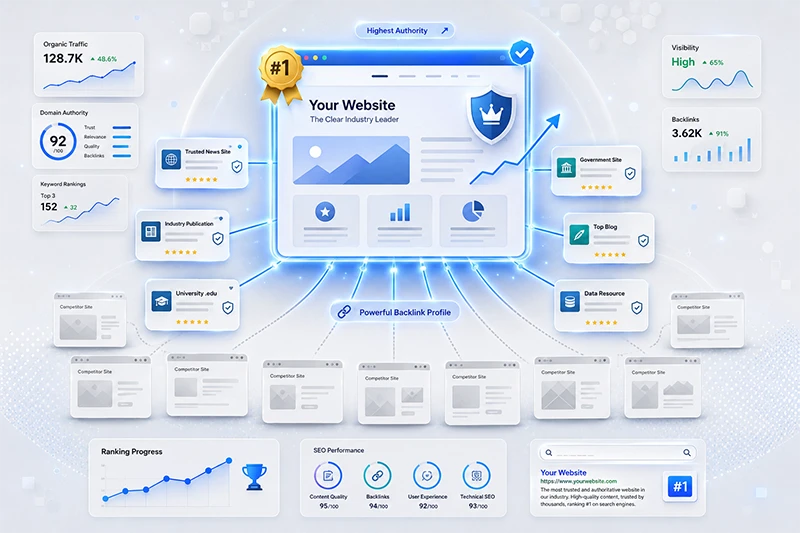
For companies operating in hyper-competitive urban hubs like Delhi, standing out requires more than just a functional, attractive website. Strategic link building places your brand directly in front of new, relevant audiences on the platforms they already trust. By securing features in industry-specific publications, you expand your reach, capture traffic from highly qualified prospects, and create a “moat” around your brand.
This competitive advantage makes it significantly harder for new, low-effort entrants to displace your established search visibility. Furthermore, being linked by top-tier industry players elevates your brand perception, making you the “go-to” authority in the minds of potential customers who may have encountered you through these third-party endorsements.
Accelerating New Content Discovery and Indexation
Search engine crawlers, or “spiders,” move across the web by following links. When you earn a link from a site that is frequently crawled and indexed by Google, your own content is discovered much faster. This is particularly important for businesses launching new seasonal offers, service pages, or long-form educational content.
A fresh, high-quality backlink acts as a fast-track for your new pages to be indexed and evaluated, helping you capture search traffic shortly after your content goes live rather than waiting weeks for organic discovery. This speed is crucial in fast-moving industries where being the first to publish information can lead to long-term ownership of the topic in search results.
Building Strategic Partnerships and Industry Influence
Successful link building is essentially relationship management. The process of pitching to editors, collaborating with other industry experts, or participating in guest content opportunities forces your business to engage with the wider industry.
These relationships often evolve into broader business partnerships—such as co-marketing initiatives, affiliate opportunities, or collaborative webinars—that provide value far beyond the initial SEO benefit of a single backlink. This networking aspect is often overlooked by business owners but is a significant driver of long-term business growth.
By becoming a recognized contributor in your field, you move from being a “vendor” to an “industry partner,” which opens doors that purely transactional businesses never see.
Core Off-Page Strategies That Deliver Results
To effectively build authority, you must execute a mix of proactive outreach and reactive content strategy. The most effective campaigns are built on a foundation of genuine value, where the links serve as a natural extension of the content being shared.
Digital PR and Media Outreach (Leveraging journalist relationships)
Digital PR is the act of providing journalists, bloggers, and editors with stories, proprietary data, or expert commentary they can use in their ongoing reporting. Instead of cold-emailing for a link, you are providing a service—you are acting as a reliable, authoritative source for their content.
When they find your contribution valuable, they will naturally cite your business as the source, earning you a high-authority editorial link that is essentially “earned” through the merit of your information. The key is to provide a unique angle or “news hook” that makes your business an indispensable part of their story. This strategy requires patience and persistence, but it builds the highest quality of links possible—the ones that are essentially “un-outrankable.”
High-Value Guest Contributions (Showcasing expertise on reputable platforms)
Writing guest content for industry-leading blogs or regional business news outlets remains a staple of authority building. The key to success here is to avoid thin, overly promotional content. Instead, focus on providing deep, educational, and actionable insights that solve a specific problem for the host site’s audience.
This positions your brand as an expert, builds trust with the readers of that site, and attracts highly targeted referral traffic. When done correctly, guest contributions are a symbiotic relationship: the host site gets high-quality, free content, and you get access to their established audience and a high-authority link. It is essential to ensure that the content you contribute is of such high quality that it would be a “featured post” on your own blog.
Localized Entity Alignment (The specific relevance for Delhi businesses)
For a business rooted in Delhi, local relevance is a major multiplier for your SEO. Getting linked from local chambers of commerce, regional industry boards, or Delhi-centric news outlets sends a very specific signal to search engines that your business is a primary player in this specific geographic entity.
Whether your operations target major commercial hubs across South Delhi, North Delhi, East Delhi, West Delhi, and Central Delhi, or extend into prominent business corridors throughout the broader Delhi NCR—including Noida, Gurugram, Ghaziabad, and Faridabad—establishing hyper-local authority is essential.
This helps you dominate “near me” and local-intent searches, ensuring that when potential customers look for your service in the capital, your business is the one they find at the top of the list. Local entity alignment also includes citations in local business directories and community event pages, which helps Google form a cohesive profile of your business’s physical presence and relevance to the Delhi market.
Anchor Text Diversification: The Art of Natural Optimization
Anchor text is the clickable text in a hyperlink. Using the same keyword-heavy anchor text for every single link is a massive red flag to search engines, suggesting manipulation. Top Delhi-based SEO agencies prioritize a clean, organic link profile by maintaining a strategic mix of anchor types:
- Branded Anchor Text: Using your company name or variations of it. This builds brand recognition and is considered the safest anchor text type. It is essential that at least 50-60% of your links utilize your brand name as the anchor text to signal to Google that the link is about your company.
- Naked URLs: Simply using your web address (e.g., https://yourwebsite.com). This is very natural as people often share links by copying and pasting the URL directly. It signals to search engines that the reference is a direct recommendation of your site.
- Generic Phrases: Using natural language like “click here,” “read more,” “this comprehensive guide,” or “this article.” While these links provide less “ranking power,” they are vital for balancing your anchor text profile and making it look organic to human and machine evaluators.
- Descriptive Keywords: Using varied phrases that describe your business or content, keeping the distribution wide so that no single keyword dominates the profile, which keeps the link growth appearing organic. This should be used sparingly to avoid triggering spam filters.
Data-Driven Link Reclamation and Competitor Intersects
Link reclamation involves finding instances where your brand is mentioned online but not linked, then reaching out to the author or editor to ask for a credit. It is a low-hanging fruit opportunity. Similarly, competitor intersect analysis involves identifying the specific websites that are currently linking to your direct rivals but not to you.
By identifying these gaps, you can focus your outreach efforts on platforms that have already shown an active interest in your specific industry. This is a highly efficient strategy because it targets sites that have a proven propensity to link to content similar to yours.
Advanced Link Building Tactics for Scaling Authority
Once the foundation of your link profile is established, scaling requires more technical and creative approaches. These advanced tactics are designed to earn high-volume, high-quality links that significantly move the needle for competitive, high-value search terms.
Broken Link Building at Scale
Broken link building involves finding broken (404) links on relevant websites and offering your own high-quality content as a relevant replacement. It is a genuine value-add: you help the site owner fix a broken user experience, and in exchange, you earn a valuable, relevant backlink.
With the right tools to identify broken links across hundreds of potential sites, this can be a highly efficient way to build a quality profile systematically. The success rate of this tactic is high because you are performing a service for the site owner, not just asking for a favor.
Resource Page Link Building and Guide Mentions
Many websites maintain resource pages—curated lists of the best tools, articles, or guides in their industry. By creating a definitive, “best-in-class” guide on your own site, you become a natural candidate for inclusion on these pages.
This requires outreach, persistence, and excellent content, but a link from a well-curated, authoritative resource page can drive long-term referral traffic and pass significant, stable authority to your site. The goal is to create content so comprehensive that it becomes the industry standard, forcing curators to include you if they want their own resource page to be considered current and accurate.
Creating and Promoting Linkable Assets (Data Studies, Tools, Infographics)
The most successful link building campaigns are product-led or data-led. By producing proprietary data studies, interactive tools (like calculators, industry assessments, or checkers), or high-quality visualizations, you provide something that others are compelled to share.
These assets become magnets for links, as they provide unique, original value that other websites simply cannot replicate on their own, making them highly attractive to publishers. A single, well-executed data study can generate hundreds of high-quality backlinks from major publications because it provides journalists with a concrete, newsworthy story that they can interpret for their readers.
The Power of Internal Linking Loops
External links build your authority in the eyes of search engines, but internal links distribute that authority effectively across your own site. By mapping out a clear internal linking structure, you can ensure that the “link equity” earned by your high-performing blog posts flows directly to the pages that matter most for your business goals.
Passing Link Equity to Commercial Rows (Money Pages)
Your “money pages”—the service pages or product pages that drive direct revenue—are often the hardest to earn external links for because they are inherently promotional. However, you can boost their search performance by ensuring your high-authority blog posts and resource pages link directly to them using relevant, descriptive anchor text.
This internal loop creates a hierarchy that tells search engines exactly which pages are most important for your business, essentially telling Google, “These are the pages that deserve the most ranking power.”
A well-optimized internal linking strategy acts as a force multiplier for your external backlink efforts, ensuring that every ounce of authority you earn from the wider web is utilized to drive your commercial objectives.
Measuring Your Link Building ROI and Impact
To treat link building as a serious business investment, you must measure its impact with the same rigor you apply to sales and marketing. A campaign without tracking is just a cost center; a tracked campaign is a scalable engine of growth.
Key Metrics to Track (Domain Rating/Authority, Trust Flow, Active Backlinks)
Use reputable, professional-grade SEO platforms to monitor the growth of your backlink profile over time. Key metrics to monitor include:
- Domain Authority/Rating: A score predicting how well a site will rank based on its link profile.
- Trust Flow: A specific measure of the quality and “cleanliness” of your incoming links.
- Active Backlinks: The total count of links currently pointing to your domain.
- Referring Domains: The number of unique websites linking to you, which is often a more important indicator than total link count, as one site linking to you multiple times is less valuable than ten unique sites linking to you once.
- Anchor Text Distribution: Monitoring what words are used to link to you to ensure it doesn’t look like a spam pattern.
- Referral Traffic: The number of users arriving at your site via these links, which confirms the links are actually reaching a human audience.
Understanding Referral Traffic and Lead Generation
The ultimate proof of your link building effort is the quality and quantity of traffic it generates. By tracking referral traffic in your analytics platform, you can identify which specific backlinks are driving users who actually convert into leads or sales.
This allows you to double down on the strategies, niches, and partnerships that provide a measurable return on your investment, ensuring your SEO budget is always focused on high-conversion outcomes rather than vanity metrics. It is critical to correlate your link building efforts with real business KPIs, such as increases in organic search revenue or lead submissions, to demonstrate the true value of your SEO strategy to your stakeholders.
Final Thoughts: Mastering Link Building
Building authority is a marathon, not a sprint. It requires a consistent, strategic approach that favors long-term growth over short-term, risky gimmicks. Whether you are aiming to dominate the local market here in Delhi or expand your reach across the national landscape, a professional, white-hat link building strategy is the most reliable way to secure your digital future.
Our team specializes in comprehensive SEO Services designed to bridge the gap between technical infrastructure and authority-driven content. We integrate advanced technical audits with sustainable, PR-driven link acquisition, ensuring your business stays ahead of algorithmic shifts and competitor advances. We combine deep technical expertise with the localized knowledge required to win in the Delhi market.
Frequently Asked Questions About Link Building
Are “No-Follow” backlinks completely useless for my website’s SEO?
No, they are not useless. While “No-Follow” links do not pass direct “link equity” (PageRank) in the traditional sense, they are essential for a natural link profile. They drive direct referral traffic, build brand awareness, and increase your reach. Search engines use these signals to understand the popularity of a brand. A site with zero no-follow links can actually look suspicious, so having a mix is healthy.
How many backlinks does it take to rank on page one of Google?
There is no magic number. Ranking is based on the quality, relevance, and authority of your backlink profile compared to your specific competitors for that search term. A single link from a high-authority industry publication can sometimes be worth more than one hundred low-quality directory links. Focus on quality and industry relevance over hitting a specific number.
Can bad or spammy backlinks actively hurt my website’s rankings?
Yes. If your site has a large volume of low-quality, spammy, or clearly manipulative links, Google’s algorithms may apply a penalty or simply choose to ignore your entire backlink profile. This is why regular monitoring and, if necessary, disavowing toxic links that you cannot have removed is a standard part of professional, proactive SEO maintenance.
How long does it typically take to see results from a white-hat link building campaign?
Because white-hat strategies focus on building genuine, sustainable authority, they are not instantaneous. Most businesses begin to see meaningful improvements in organic rankings and traffic within three to six months. The exact timeline depends heavily on the competitiveness of your industry, the current health of your domain, and the intensity of your campaign.
Is it ever safe to buy links for SEO purposes?
No, buying links to manipulate search rankings is a direct violation of Google’s Webmaster Guidelines. While some forms of sponsored content are legitimate if properly labeled with “no-follow” or “sponsored” tags and disclosed to the reader, purchasing links with the explicit intent to pass PageRank carries a high risk of manual penalties, which can be devastating for your website’s long-term viability and revenue.